Philosophical
Freud vs. Adler: Is It About Who Is Right, or What We Need at a Certain Stage of Life?
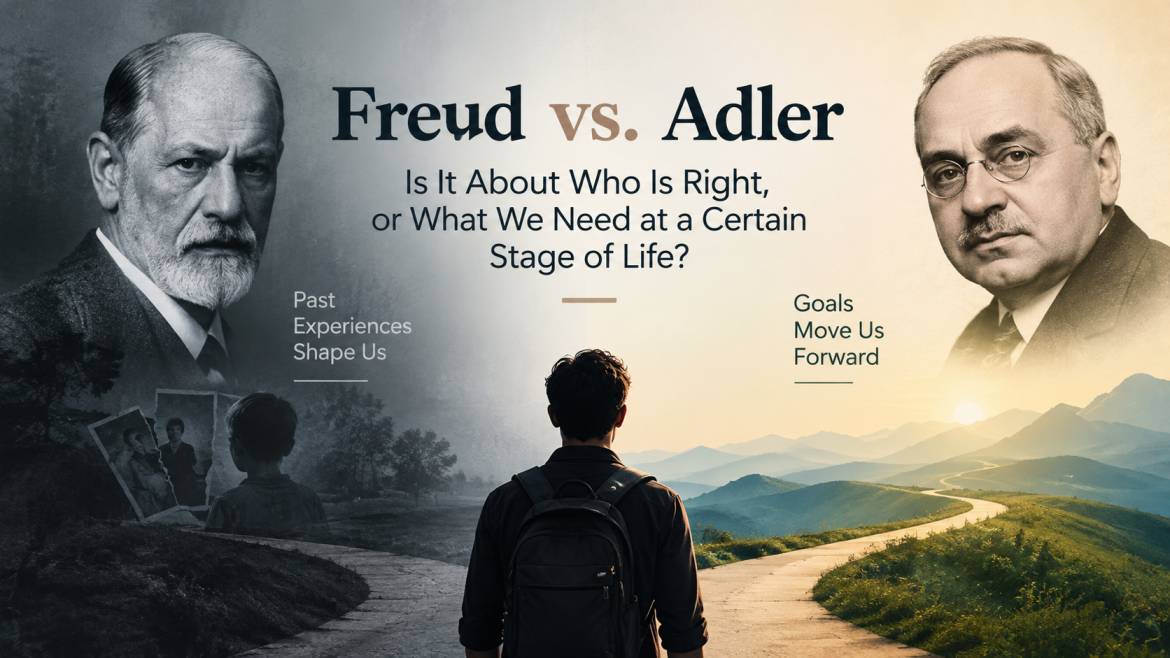
Freud helps us understand how our past shapes us, while Adler reminds us that our past does not have to define our future. Perhaps the real question is not who is right, but which perspective we need at a particular stage of life. Sometimes, we need to look backward to understand ourselves; at other times, we need to look forward to become who we want to be.
In psychology, we often find ourselves comparing Sigmund Freud’s etiological perspective with Alfred Adler’s teleological perspective. Freud emphasizes how our past experiences shape our present behavior, while Adler focuses on our goals and how we can move forward. But what if both are right? What if the real question is not who is right, but which perspective we need at a particular stage of our lives?
From the very beginning of our lives until our twenties or even mid-twenties, we experience countless things that shape our mentality. Our childhood experiences, family circumstances, failures, and emotional struggles influence how we perceive the world. If we follow Freud’s perspective, we can understand how these experiences affect us. Perhaps our parents separated, perhaps we faced rejection, or perhaps something happened during childhood that left a lasting impact.
Consider a simple example. If we get injured in an accident, we become cautious about doing the same thing again. That caution is natural. Our past experiences teach us lessons, and there is nothing wrong with learning from them. Freud helps us understand why we feel the way we do.
However, the problem begins when caution turns into avoidance. Sometimes, we do not even attempt something because we are afraid of failing again. We might blame our past, our lack of confidence, or our childhood experiences for why we cannot move forward.
This is where Adler becomes important.
Adler’s perspective reminds us that our past does not have to determine our future. Yes, something might have happened to us, but that does not justify giving up on growth. We can acknowledge our fears without allowing them to control our decisions. We can learn from our experiences while still choosing to move forward.
Of course, people develop at different rates. Some demonstrate maturity earlier than others, while many of us need time to understand ourselves and overcome our limitations. Growth is not the same for everyone.
Perhaps, when we reach our fifties or sixties, or even the final stages of our lives, we begin to see things differently. We may realize that everything had a reason, or at least that every experience contributed something to who we became. We might have followed Adler’s perspective when we needed the courage to move forward, even though Freud’s perspective helped us understand where our struggles originated.
Ultimately, I do not believe this is simply about Freud being right or Adler being right. It is about understanding where we stand at a particular stage of life and what we need to progress.
Sometimes, we need to look backward to understand ourselves. At other times, we need to look forward to become who we want to be.
Perhaps wisdom lies in knowing when to understand our past and when to stop letting it define our future.